What is a battery-powered meeting table?
A battery-powered meeting table is a commercial meeting table with integrated rechargeable power, allowing users to charge laptops, phones and other devices without relying on floor boxes, wall sockets or fixed mains cabling. This cableless design allows facilities teams to reconfigure spaces quickly without having to manage trailing wires.
Modern meeting spaces are expected to do more than host a single type of meeting. The same room may need to support board-level presentations, hybrid calls, training sessions, project work and collaborative workshops, often with different layouts across the same week.
That level of flexibility is difficult to achieve when power is tied to floor boxes, wall sockets, or visible cabling. Once a table is plugged into the floor, the room layout becomes fixed. If teams try to move the furniture, they are left with trailing cables that look untidy and create safety hazards.
Battery-powered meeting tables solve this by bringing rechargeable power directly into the furniture. This allows the room to adapt without compromising access to charging, the visual finish or the user experience. By removing the dependency on fixed infrastructure, specifiers can create truly adaptable collaborative environments.

How does a battery-powered meeting table work?
A battery-powered meeting table operates by concealing high-capacity rechargeable battery packs within its frame or column legs. These battery packs connect to discreet power outlets and USB-C charging ports integrated into the table surface or edge.
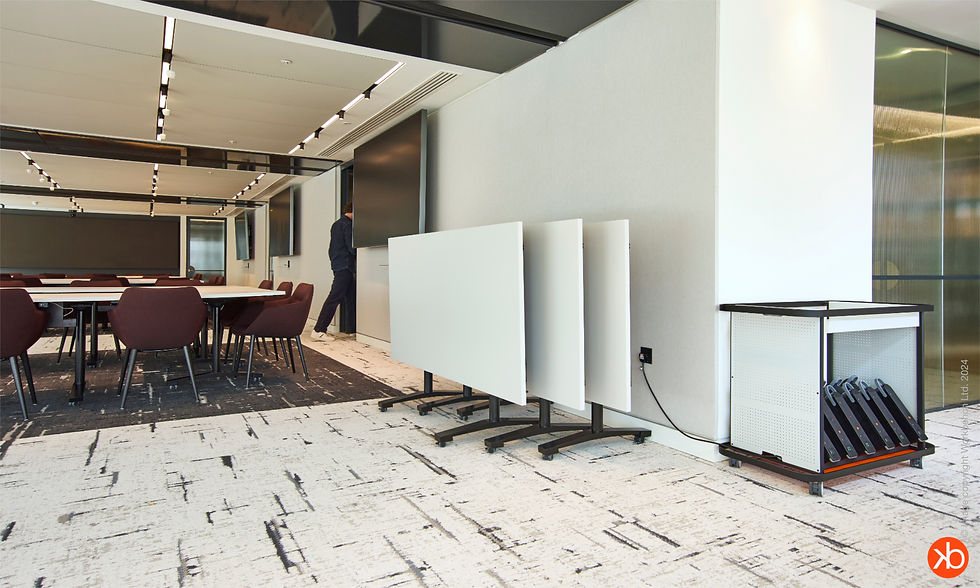
Instead of plugging the table into a wall socket, users draw power directly from the battery system. When the power runs low, facilities teams can simply unclip the battery packs and place them on a dedicated charging trolley. Fresh batteries can then be swapped in, ensuring continuous operation without taking the table out of service.
This system eliminates the need for floor boxes and trailing cables. For architects and workplace consultants, it means power can be planned as part of the furniture system, rather than being dictated solely by the building infrastructure.
What can a rechargeable meeting table power?
A premium rechargeable meeting table is designed to support the everyday technology used in commercial workspaces. Integrated USB-C charging ports and optional power outlets give users convenient access to power right where they work.
These tables typically power:
Laptops and tablets are used for presentations and note-taking.
Mobile phones require a top-up during long workshops.
Small collaborative devices, such as portable conferencing speakers.
The strongest powered meeting tables do not make technology the focal point. They integrate it quietly, so the room remains visually clean and the table remains easy to use.
Where does a cableless meeting table help in the workplace?
A cableless meeting table provides significant advantages in environments where flexibility is a priority or where altering the building is not possible.
Choose a battery-powered table if you are designing a multi-purpose training room that needs to shift from a classroom layout to a boardroom configuration. Because there are no cables tethering the furniture to the floor, facilities teams can move and link tables in minutes.
These tables are also highly effective in listed buildings or heritage properties. In these settings, drilling into the floor to install new mains connections is often disruptive, costly or legally prohibited. A battery table delivers necessary power without requiring invasive fit-out work.
What should specifiers look for in a battery-powered table system?
When specifying a battery-powered meeting table, the first question should be how the room needs to work. A boardroom, training room and collaborative space may all require access to power, but they will not use the table in the same way.
Specifiers should evaluate the following elements:
Battery management workflow: Look for a system with removable batteries and a dedicated charging trolley. This ensures the table never has to be plugged into the wall to recharge.
Mobility and linking: If the room requires frequent reconfiguration, specify a mobile flip-top table equipped with castors and linking mechanisms.
Visual integration: The technology should be discreet. Concealed cable management and refined finishes are essential for premium interiors.
Long-term performance: Choose an established solution developed for demanding commercial interiors, supported by lifecycle documentation and responsible material sourcing.
The best solution is not simply the table with the largest battery, but the complete system that best fits how the space will be used.
Air Atoll: Workbench's established battery-powered meeting table
Air Atoll is our battery-powered, mobile flip-top meeting table system for flexible commercial spaces. It allows meeting rooms, boardrooms and training environments to access integrated power without relying on floor boxes, fixed mains connections or visible trailing cables.
Designed and manufactured by Workbench, Air Atoll combines rechargeable battery power, mobile flip-top functionality, linking configurations and integrated charging access. Twin USB-C charging points or power outlets are mounted discreetly to deliver power precisely where it is needed.
Air Atoll operates independently of a mains supply for extended periods using the QIKPAC CARRY lithium battery system. The power banks are simply unclipped from their receptors and slotted into a base station or mobile charging trolley for recharging.
With options for veneer, Fenix, laminate or MFC finishes, Air Atoll supports the design intent of high-quality interiors while providing the operational practicality that modern workplaces demand.
Frequently asked questions about meeting tables with battery packs
How long does a meeting table with a battery pack last on a single charge?
A commercial meeting table with a battery pack typically lasts for several days of standard use before requiring a recharge. The exact duration depends on the number of users and the types of devices being charged. Still, high-capacity lithium systems are engineered to easily support long workshops and consecutive meetings.
What is the best way to charge a battery table?
The most efficient way to manage power is through a swappable battery system. Rather than plugging the entire table into a wall socket, facilities teams remove the depleted battery pack and place it on a mobile charging trolley. A fully charged battery is then inserted into the table, reducing downtime to seconds.
Can a cableless meeting table link with other units?
Yes, many premium cableless meeting tables are designed to link together. Systems like Air Atoll feature linking mechanisms that allow individual tables to form larger boardroom configurations or continuous training rows, all while remaining fully mobile.
Are battery-powered office furniture systems safe for commercial use?
When specified correctly, battery-powered office furniture is entirely safe for commercial workspaces. Established systems use regulated lithium battery technology and concealed wiring to prevent electrical hazards and eliminate the trip risks associated with traditional trailing cables.
Specify Air Atoll for your next commercial project
A cableless meeting table allows the room to adapt as the working day evolves, giving teams access to power without compromising the space's look or flexibility. By planning power as part of the furniture system, architects and designers can create truly adaptable environments.
Speak to Workbench about specifying Air Atoll for your next commercial workspace project. Ask the Workbench team about integrating rechargeable power into your meeting table specification, and discover how a carefully specified system can support your design intent.
Furniture solutions by Workbench
Designed by us, tailored by you.
Discover more about Air Atoll here...