How to Specify a Battery-Powered Meeting Table
To specify a battery-powered meeting table, start by assessing the intended room use and power demand. Specifiers must then evaluate existing floor boxes, select the appropriate table format, configure USB-C and power outlets, choose premium finishes, and plan a practical battery management workflow for facilities teams.
Modern meeting spaces are expected to do more than host a single type of meeting. The same room may need to support board-level presentations, hybrid calls, training sessions, and collaborative workshops, often with different layouts across the same week.
That level of flexibility becomes difficult when power is tied to floor boxes, wall sockets or visible cabling. Battery-powered meeting tables solve this by bringing rechargeable power directly into the furniture, allowing the room to adapt without compromising access to charging, the visual finish or the user experience.
As battery-powered meeting tables become more visible in the market, specifiers need to look carefully at how each system works in practice. The presence of a battery is only one part of the decision. Power, mobility, charging workflow, and long-term use all need to be considered. This guide explains how architects, designers, and facilities teams can approach office furniture specification to deliver a solution that performs in demanding commercial environments.

What are the first steps to specify a battery-powered meeting table?
Start with the room use. A boardroom, training room and collaborative space may all require access to power, but they will not use the table in the same way. Specifiers should evaluate how often the layout changes and what activities will take place. If the space requires daily reconfiguration, a mobile flip-top table system will be more suitable than a static unit.
Next, understand the power demand. Determine how many users will need charging access simultaneously and what devices they will use. Laptops, tablets, and mobile phones draw different levels of power, which influences the required battery capacity. A workplace specifier must ensure the chosen system can handle the peak electrical draw during fully occupied meetings.
How do existing floor boxes impact the office furniture specification?
Assess the current floor boxes and fixed infrastructure within the commercial workspace. For listed buildings or areas where introducing mechanical and electrical services is disruptive, a cableless meeting table offers a practical alternative.
By removing the dependency on floor boxes, specifiers can plan meeting spaces around people and movement rather than fixed power points. This approach also reduces costly infrastructure modifications during a commercial fit-out. If a room has limited mains access, a rechargeable meeting table provides immediate power for presentations without the need for concrete trenching or raised access floors.
Which meeting table format is best for flexible commercial spaces?
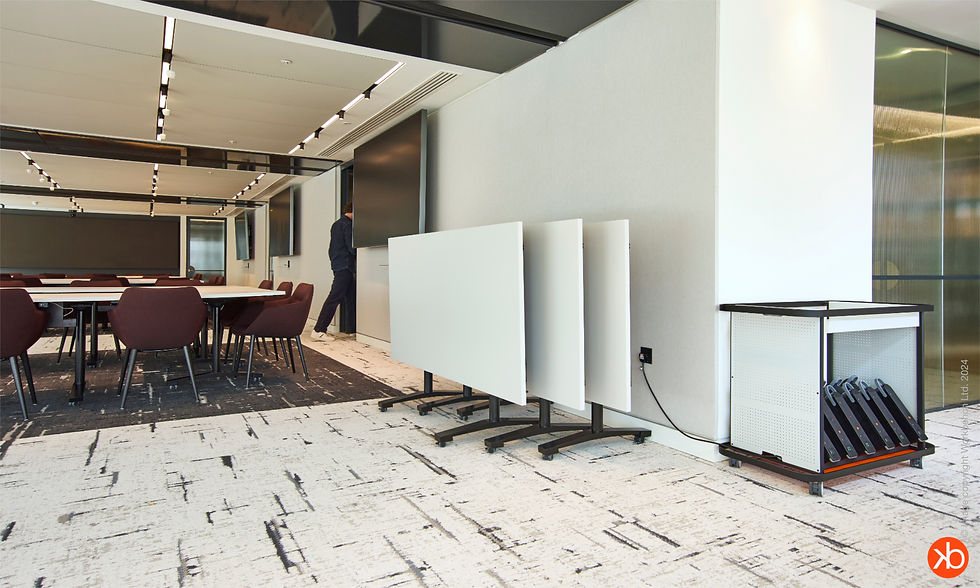
Choose a table format that supports adaptable room layouts. For premium interiors that demand maximum flexibility, a mobile flip-top table is often the most practical choice. These tables can be nested and stored when not in use, freeing up valuable floor space for large presentations or events.
Specifiers should also look at linking tables. A configurable system allows individual units to be joined to form a large boardroom layout, then separated for smaller-group workshops. When comparing powered meeting table options, check that the linking mechanisms are robust and easy for users to operate without calling upon facilities staff.
What should specifiers look for in power outlets and USB-C integration?
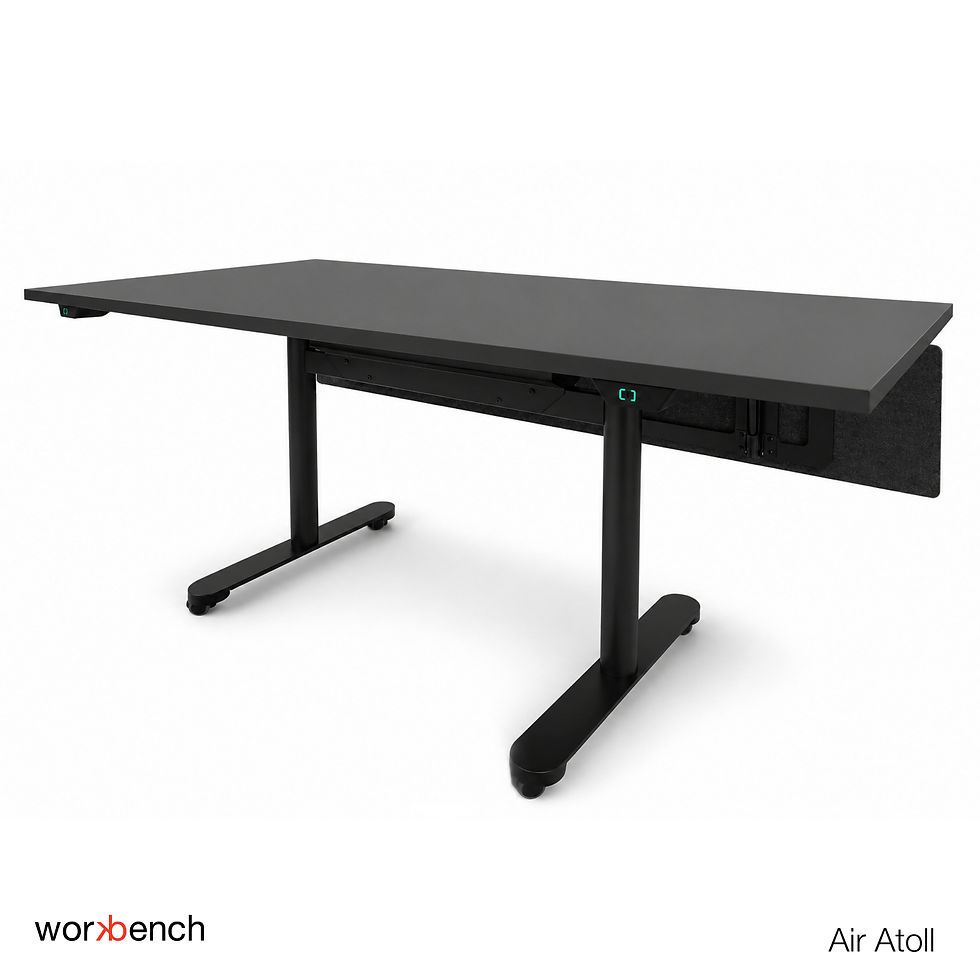
Specify USB-C charging points and power outlets that sit discreetly at the table edge. The strongest powered meeting tables do not make technology the focal point. They integrate it quietly, so the room remains visually clean and the table remains easy to use.
Ensure that the power distribution is managed through concealed cable management. This keeps trailing cables out of sight, reducing trip hazards and maintaining a premium aesthetic. Integrated USB-C charging gives users access to power wherever they work, rather than forcing the room layout to accommodate wall socket locations.

How should facilities teams plan for long-term battery management?
A rechargeable meeting table is only effective if it remains powered throughout the working day. Specifiers must consider how batteries will be accessed, exchanged, and charged. Facilities managers need a repeatable, manageable way to keep rooms powered without operational friction.
Choose a system that utilises easily swappable power banks. A dedicated mobile charging trolley is highly recommended, as it allows facilities teams to transport and charge multiple batteries simultaneously. This workflow ensures that replenished units are always available, minimising downtime between meetings.
What finish and size options are suitable for a workplace specifier?
Consider the finish and size to ensure the furniture aligns with the broader design intent. Commercial meeting tables must withstand heavy daily use while maintaining a refined appearance. Specifiers should select durable materials such as high-pressure laminate, Fenix, or timber veneer.
Ensure the manufacturer can tailor dimensions to suit specific spatial requirements. For example, advanced double-column frame configurations can support table tops up to 3000 mm by 1500 mm, providing ample space for executive boardrooms. Matching the edge detailing and frame colours to the surrounding architecture ensures the table looks like a considered part of the interior rather than a standalone piece of equipment.
Why involve Workbench early in the specification process?
Air Atoll is Workbench's battery-powered, mobile flip-top meeting table system for flexible commercial spaces. Designed and manufactured in Britain, it combines rechargeable battery power, linking configurations, and integrated charging access. By bringing Workbench into the project early, specifiers gain access to technical support, 3D drawings, and bespoke material matching.
With more products entering the category, it is vital to choose a fully resolved system rather than a table that simply houses a battery. Air Atoll has been refined through real workplace use, making it an established benchmark for cableless meeting spaces. It gives commercial meeting spaces a practical way to support laptops and phones without allowing fixed power infrastructure to dictate the room layout.
Plan your next commercial workspace with confidence
Specifying a battery-powered meeting table requires careful consideration of power, mobility, charging workflow, and long-term use. By evaluating these factors, architects and designers can deliver adaptable, premium meeting rooms that meet the demands of modern hybrid work.
Contact Workbench for support, specifying Air Atoll for commercial meeting spaces. Our team can help configure a rechargeable meeting table system that integrates beautifully into your next project.
Frequently asked questions about specifying rechargeable meeting tables
What is a battery-powered meeting table?
A battery-powered meeting table is a commercial meeting table with integrated rechargeable power, allowing users to charge laptops, phones, and other devices without relying on floor boxes, wall sockets, or fixed mains cabling.
How long do the batteries last on a cableless meeting table?
Battery life depends on the specific power demand of the connected devices. A well-specified system like Air Atoll can power multiple laptops and mobile phones for several hours at a time before the power banks need to be exchanged and
recharged in a mobile charging trolley.
Can a rechargeable meeting table be linked to form larger configurations?
Yes. Many battery-powered meeting tables, including Air Atoll, are designed as modular systems. They can be used as standalone units or linked seamlessly to create larger collaborative environments and continuous boardroom tables.
Are there sustainable benefits to specifying battery-powered office furniture?
Yes. Sustainability is part of the specification conversation. A cableless meeting table supports lifecycle thinking by adapting to future office reconfigurations. It also eliminates the need for disruptive and material-heavy infrastructure changes, such as cutting into floors to install new floor boxes.