Why Flexible Workspaces Need Power Without Floor Boxes
Floor boxes and fixed power infrastructure restrict meeting room layouts and limit workspace flexibility. Battery-powered meeting tables solve this by integrating rechargeable power directly into the furniture. This allows architects and facilities managers to configure cableless office furniture without being tied to a fixed mains connection.
Modern meeting spaces are expected to do more than host a single type of meeting. The same room may need to support board-level presentations, hybrid calls, training sessions, and collaborative workshops. Often, these different activities require completely different furniture layouts across the same working week.
That level of adaptability is difficult when power is tied to floor boxes or wall sockets. When furniture must conform to the building's infrastructure, the room quickly loses its flexibility. A meeting room is only flexible if the furniture can move with it.
To create a truly adaptable commercial workspace, specifiers are looking for ways to detach power from the floor. This guide explains why fixed electrical infrastructure limits office design and how battery-powered meeting tables offer a highly practical alternative.

How do floor boxes restrict commercial meeting rooms?
Floor boxes dictate exactly where furniture can be placed. If a table must sit directly over a floor box to hide cables, the room layout becomes instantly fixed.
When a business wants to convert a formal boardroom into an open training room, the tables need to be moved. However, if those tables require a fixed mains connection to power laptops and phones, moving them would mean losing access to charging. For users who rely on their devices for hybrid work and presentations, a lack of power makes the space unusable.
For interior designers and workplace consultants, this creates a significant design constraint. The room must be planned around the electrical grid rather than the actual needs. Relying on fixed floor boxes means the space cannot adapt to changing workflows or new collaborative behaviours.
What is the problem with fixed power infrastructure?
Fixed power infrastructure is expensive, rigid, and highly disruptive to install. Adding new floor boxes often involves drilling into concrete slabs or raising floors, which can complicate and delay a commercial fit-out.
For listed buildings or heritage sites, introducing new electrical services may not even be possible. Drilling into historic floors is often prohibited. This leaves facilities teams with extremely limited options for powering modern meeting room furniture.
Even in newly constructed modern buildings, fixed infrastructure lacks long-term adaptability. As business needs change over the years, the power grid remains completely static. This forces companies to undergo costly and disruptive renovations simply to move a meeting table to a new location. Sustainability is part of the specification conversation, and reducing the need for disruptive infrastructure changes is a key component of lifecycle thinking.
Why are trailing cables an issue in flexible workspaces?
When tables are moved away from their designated floor boxes, the immediate workaround is often the use of extension cords. This creates trailing cables across the commercial office floor.
Trailing cables introduce significant trip hazards, raising immediate safety and compliance concerns for facilities managers. Managing these cables requires constant intervention by the facilities team, adding unnecessary operational friction to the workday.
Beyond safety, trailing cables create severe visual clutter. This compromises the premium appearance of a carefully designed boardroom or meeting space. A flexible commercial interior should feel intentional, refined, and resolved. Visible cabling makes the room look temporary and unfinished, significantly reducing the overall quality of the user experience.
What are the benefits of cableless office furniture?
Cableless office furniture completely removes the reliance on a fixed mains connection. By integrating rechargeable battery systems directly into the tables, users retain access to power regardless of the furniture's position.
This gives architects and designers the total freedom to plan spaces around people, purpose, and movement. A single room can easily transition from a formal meeting setup to an open collaborative environment without ever sacrificing access to USB-C charging.
For contractors and furniture dealers, cableless tables simplify the fit-out process. Since there is no need to align furniture perfectly with floor boxes, installation is faster and less prone to coordination errors. It gives dealers and contractors a proven product for projects where powered meeting spaces are required but fixed infrastructure is either impractical or overly restrictive.
How does Air Atoll provide a no-floor-box solution?
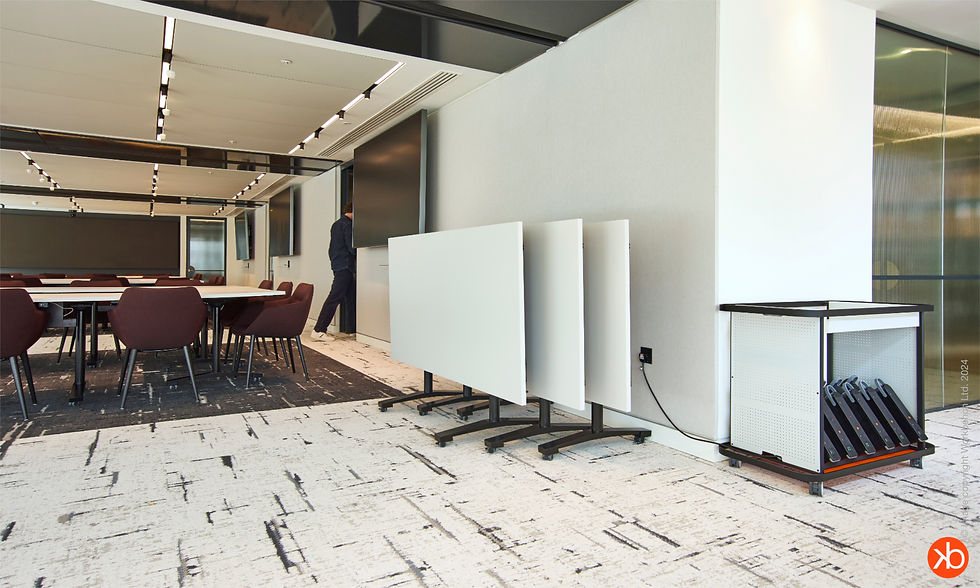
Air Atoll is Workbench's battery-powered, mobile flip-top meeting table system. It was developed specifically for flexible commercial environments where fixed power infrastructure restricts how a space is used.
Designed and manufactured by Workbench, the Air Atoll system combines rechargeable battery power, mobile flip-top functionality, linking configurations, and integrated charging access. It uses the pioneering Animate lithium battery system by OE Electrics to power laptops, mobile phones, and other devices for hours at a time.
The system delivers discreet twin USB-C charging points or optional OE Piton power outlets directly to the table edge through fully concealed cabling. This gives users convenient access to power without any visible cables cluttering the workspace. The table features a carefully curated range of finishes, including laminate, Fenix, and veneer, ensuring it looks appropriate in premium boardrooms.
Practical battery management is also a core part of the system. The rechargeable battery packs are easily exchanged when depleted. A dedicated mobile charging trolley ensures that batteries are always available for replenishment, making day-to-day management incredibly simple for facilities teams.
Furthermore, Air Atoll supports larger collaborative environments. A new double-column frame configuration allows the system to support table tops up to 3000 mm by 1500 mm. Optional folding or demountable modesty panels offer additional privacy and design flexibility.
Next steps for your commercial workspace
A cableless meeting table allows the room to change as the working day changes. It gives teams reliable access to power without compromising the look or flexibility of the space.
By looking beyond traditional floor boxes, businesses can create commercial workspaces that truly support hybrid work, adaptable layouts, and long-term value.
Speak to Workbench about specifying Air Atoll for your next commercial workspace project. Ask the Workbench team about integrating rechargeable power into your meeting table specification to create a fully adaptable, cableless environment.
Frequently asked questions about cableless meeting tables
What is a battery-powered meeting table?
A battery-powered meeting table is a commercial meeting table with integrated rechargeable power. It allows users to charge laptops, phones, and other devices without relying on floor boxes, wall sockets, or fixed mains cabling.
Are cableless meeting tables suitable for listed buildings?
Yes. Cableless meeting tables are ideal for listed buildings and heritage sites. Because they operate on rechargeable batteries, they completely remove the need to drill into historic floors or install disruptive new electrical infrastructure.
How are the batteries managed in a commercial office?
Battery management is handled through a straightforward exchange process. Depleted battery packs are unclipped from the table and placed into a mobile charging trolley. Fresh, fully charged batteries are then slotted back into the table, ensuring zero downtime for the meeting space.
What are the alternatives to installing new floor boxes?
If installing new floor boxes is too expensive or disruptive, the primary alternative is specifying battery-powered office furniture. Systems like Air Atoll provide the necessary power for user devices while allowing the furniture to remain mobile and free from fixed infrastructure.
How long does a battery-powered table last during a meeting?
The exact duration depends on the specific devices being charged and how many users are drawing power simultaneously. However, commercial-grade lithium battery systems are engineered to reliably power multiple laptops and mobile phones for several hours, easily covering back-to-back meetings.
Furniture solutions by Workbench
Designed by us, tailored by you.
Discover more about Air Atoll here...